
Zingend Rood
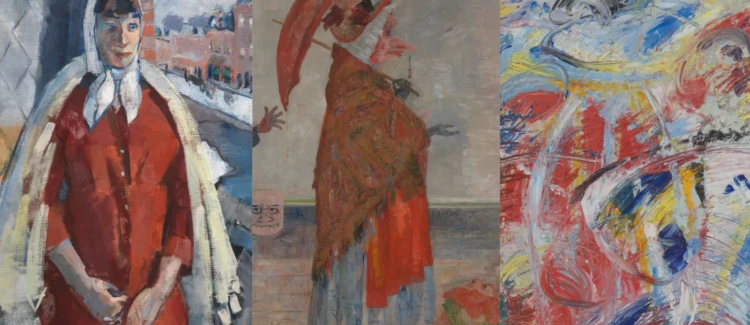
What if colours could sing? That question forms the starting point of Singing Red at KMSKA, where colour is no longer merely visible but vibrates, moves, and becomes a sensory force. Artists such as Ensor, Wouters and Schmalzigaug did not see colour as decoration, but as energy, rhythm and intensity — a quality you can almost hear. That very idea lies at the heart of this concert.
The three works on the programme approach music as a play of light, shadow and timbre. Melody or form is not the primary focus; rather, it is the experience of sound itself: how a timbre flares up, thickens, shifts in colour or dissolves. In Claude Debussy 's music, sound takes on an impressionistic glow, with harmonies moving like light on water. In Luc Brewaeys' Painted Pyramids, sound becomes architecture: built from overtones, resonances and electronic shadows, like painted volumes in a futuristic field of colour. And finally, Tristan Murail lets sound slowly transform, like a sunset unfolding in ever more subtle shades.
As in 'Singing Red', the focus here is not on representation, but on perception and intensity. Sound functions as colour, music as a living surface in constant transformation — singing, vibrating and always in motion. The concert takes place within the exhibition, among the paintings. The perfect moment to turn your gaze to Antwerp.
Program & credits
Claude Debussy
La Mer (1905) Part 1: De l’aube à midi (in the version for pianotrio arranged by Sally Beamish)
Luc Brewaeys
Painted Pyramids (2008) (for piano solo, ensemble and electronics)
Tristan Murail
Treize couleurs du soleil couchant (1978) (for five instruments)
SPECTRA